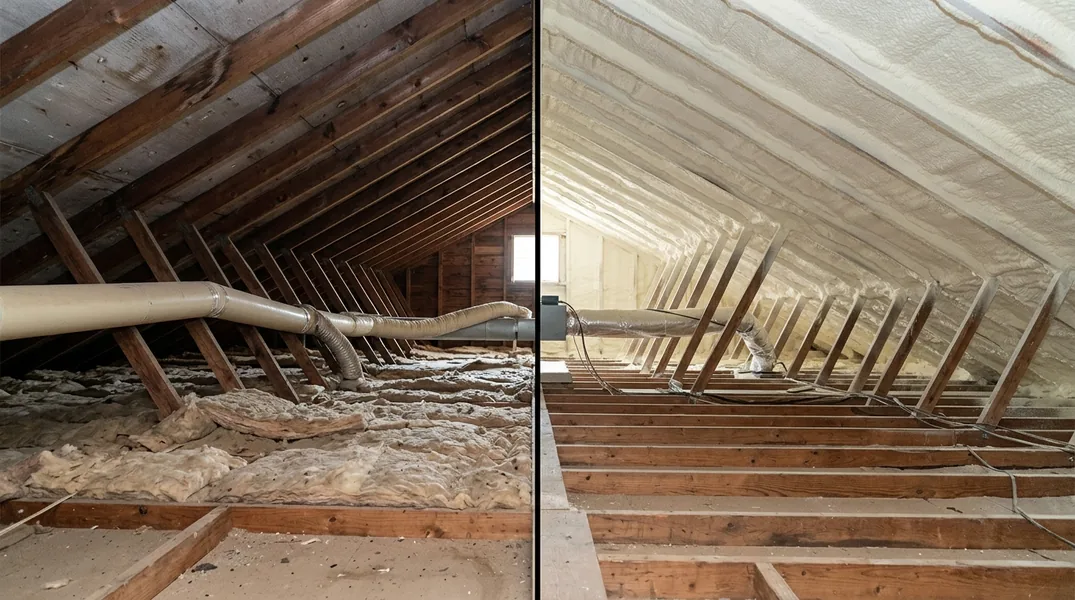
The Problem with Settled Insulation in Older Sebastian County Homes
If you own a mid-century ranch in Fort Smith, you've probably noticed something troubling: your energy bills keep climbing, and your attic feels either scorching in summer or frigid in winter. The culprit is often settled insulation, a problem that plagues homes built in the 1950s through 1970s. Over decades, traditional Fort Smith attics lose their insulation effectiveness as materials compress, settle, and create gaps that let conditioned air escape.
Blown-in fiberglass and cellulose, the standard choices when these homes were built, are particularly vulnerable to settling. As your attic experiences temperature swings and seasonal moisture changes, the material gradually compresses. This settling can reduce R-value by 20 to 30 percent over time, meaning your heating and cooling system works harder than it should. The result is wasted energy, higher utility costs, and uneven temperatures throughout your home. For homeowners in Sebastian County, understanding why this happens is the first step toward a real, lasting solution.
Spray Foam vs Blown In Insulation: Why Spray Foam Wins for Settling Problems
When comparing spray foam vs blown in insulation, the differences become clear when you look at long-term performance in older homes. Blown-in materials, whether fiberglass or cellulose, rely on density and weight to resist heat transfer. However, they do not bond to your attic structure. Over time, vibration from HVAC systems, temperature fluctuations, and natural settling cause these materials to compress and shift, creating air gaps that compromise insulation value. Spray foam, by contrast, expands and hardens into a solid mass that adheres to every surface, filling cracks, seams, and irregular spaces that traditional insulation simply cannot reach.
Attic Spray Foam Insulation maintains its R-value indefinitely because it does not settle or compress. The material forms an air-tight seal that prevents thermal bridging and air leakage, the two biggest sources of energy loss in older homes. For mid-century ranches where settled insulation has already caused problems, spray foam offers a permanent fix rather than a temporary patch. It also provides superior moisture control, an important benefit in the humid Arkansas climate where condensation and mold growth can damage attic framing and reduce insulation effectiveness over time.
Spray Foam vs Fiberglass: Understanding the Performance Difference
The comparison between spray foam vs fiberglass often comes down to performance longevity and real-world effectiveness. Fiberglass batts and blown-in fiberglass were the industry standard for decades because they were affordable and easy to install. However, fiberglass has inherent limitations. It requires an air gap to work properly, relies on density for insulation value, and offers minimal air sealing capability. In older homes where framing is irregular and gaps are common, fiberglass leaves thermal weak spots. Additionally, fiberglass can absorb moisture, which reduces its insulating properties and creates conditions for mold growth in humid climates.
Spray foam, whether open cell or closed cell, addresses these shortcomings directly. Closed Cell Spray Foam Insulation provides superior R-value per inch (around 6.5 to 7 per inch versus 3.5 for fiberglass), moisture resistance, and structural support. Open Cell Spray Foam Insulation offers excellent acoustic properties and air sealing at a lower cost. Both types cure to a rigid state that will not settle, compress, or degrade over the decades ahead. For homeowners tired of rising energy bills and uneven comfort, making the switch from fiberglass to spray foam represents a meaningful upgrade in home performance.
Spray Foam vs Cellulose: Why Cellulose Settlement Is a Real Concern
Many older homes in Sebastian County used cellulose insulation, a recycled paper product that offered environmental benefits and decent initial R-value. However, spray foam vs cellulose reveals a critical weakness in cellulose: it settles more aggressively than fiberglass. Cellulose is lighter and more prone to compression, especially in deep attics where the weight of material at the top compresses material below. Over 20 to 30 years, cellulose can settle by 15 to 20 percent or more, significantly reducing its effectiveness. Cellulose also absorbs moisture readily, which can lead to mold growth, material degradation, and loss of insulating properties in humid environments like Arkansas.
Spray foam eliminates these concerns entirely. Unlike cellulose, spray foam does not settle, does not absorb moisture, and does not support mold growth. It maintains consistent R-value year after year, protecting your home from the elements and keeping your utility bills stable. If your attic currently has cellulose that has settled over the years, spray foam replacement is one of the most effective ways to restore energy efficiency and comfort. The investment pays for itself through reduced heating and cooling costs, and you gain peace of mind knowing your insulation will perform reliably for decades to come.
Best Insulation for Attic: Why Spray Foam Leads the Market
When homeowners ask what is the best insulation for attic applications, the answer increasingly points to spray foam. This is not just marketing hype. Industry data, energy audits, and real-world performance comparisons consistently show that spray foam delivers superior results compared to traditional alternatives. The reasons are straightforward: spray foam provides complete air sealing, maintains R-value indefinitely, resists moisture and mold, and adapts to irregular attic geometry. In older homes where settling insulation has already compromised comfort and efficiency, spray foam offers the most effective path to restoration.
For a mid-century ranch in Fort Smith, choosing spray foam means investing in a solution that will outlast the home itself. The material does not require replacement, does not degrade under normal conditions, and continues to perform at rated R-value for 50 years or more. When you factor in energy savings, improved comfort, reduced HVAC strain, and the elimination of future settling problems, spray foam becomes not just the best choice but the most economical choice over the long term. If you are considering an attic insulation upgrade, this is the time to explore spray foam options with a local specialist who understands the unique challenges of older Sebastian County homes.
Attic Spray Foam Insulation Cost in Fort Smith: What to Budget
Understanding pricing for Attic Spray Foam Insulation is essential for planning your upgrade. Spray foam typically costs more upfront than blown-in fiberglass or cellulose, ranging from 1.50 to 3.00 dollars per board foot depending on material type, attic size, and complexity. For a typical mid-century ranch attic of 1,000 to 1,500 square feet, homeowners should budget between 3,000 and 6,000 dollars for a complete spray foam installation. While this represents a higher initial investment than traditional insulation, the long-term value is substantial.
Energy savings typically recover the investment within 5 to 10 years, after which you enjoy reduced utility costs indefinitely. Additionally, spray foam eliminates the need for future insulation replacement or repair, a cost that blown-in insulation often requires as materials settle and degrade. Many homeowners also see improved home value and reduced HVAC maintenance costs. To understand exactly what your attic upgrade will cost, contact Fort Smith Spray Foam Insulation at (479) 415-0861 for a free estimate. Our team will assess your current insulation, measure your attic, and provide a transparent quote based on your specific needs and home characteristics.
Looking for a professional spray foam insulation contractor in Fort Smith? Fort Smith Spray Foam Insulation responds fast for all your spray foam insulation needs.
Get a Free Quote