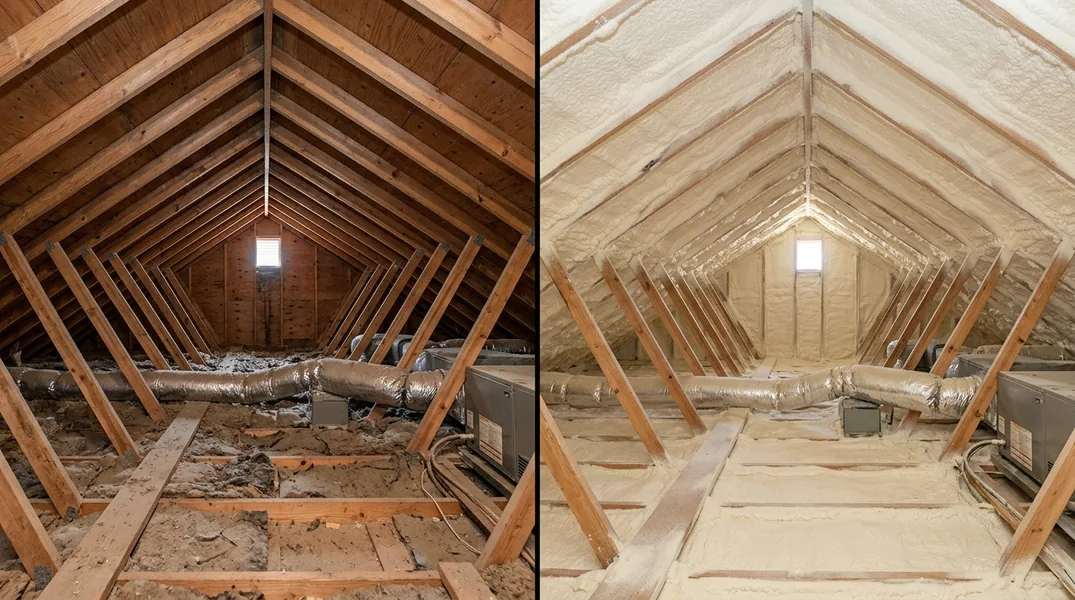
Understanding Spray Foam Attic Insulation: Open Cell vs Closed Cell
When it comes to insulating your attic, Attic Spray Foam Insulation has become one of the most effective solutions for Fort Smith homeowners. However, many people don't realize that spray foam comes in two distinct varieties, each with its own set of advantages and disadvantages. Understanding the difference between open cell and closed cell spray foam is essential before making an investment in your home's energy efficiency and comfort.
The choice between these two types isn't simply a matter of personal preference. Each has specific performance characteristics, moisture management properties, and cost implications that directly affect how well your attic will perform over time. Whether you're dealing with Arkansas humidity, seasonal temperature swings, or just want to reduce your energy bills, knowing what separates these two options will help you make an informed decision for your home.
What Is Open Cell Spray Foam and How Does It Work?
Open Cell Spray Foam Insulation is a lighter, more flexible material that contains cells that are not completely closed. Think of it like a sponge with tiny interconnected pockets of air. When applied to your attic, the foam expands significantly and fills every crack, crevice, and gap in your space. This expansion capability makes it excellent for reaching difficult areas and creating a comprehensive air seal.
One of the primary advantages of open cell foam is its acoustic properties. If noise from outside or between rooms is a concern, open cell spray foam provides superior sound dampening compared to its closed cell counterpart. Additionally, open cell foam is generally more affordable than closed cell options, making it an attractive choice for budget-conscious homeowners. The material is also vapor permeable, which means it allows moisture to pass through it. This characteristic can be beneficial in certain applications where you want to avoid moisture trapping, though it requires proper ventilation strategy in your attic design.
The R-value of open cell spray foam typically ranges from R-3.5 to R-3.8 per inch, which is lower than closed cell but still provides solid insulation performance. In Fort Smith's climate, this level of insulation, combined with air sealing benefits, can significantly improve your home's thermal envelope and reduce heating and cooling costs.
Closed Cell Spray Foam: Superior Density and Protection
Closed Cell Spray Foam Insulation represents the premium option in spray foam technology. Unlike open cell, closed cell foam has cells that are completely sealed, creating a dense, rigid barrier. When applied, it expands less than open cell but creates a much denser final product that's harder and more durable. This structural rigidity actually adds strength to your attic framing and can contribute to the overall structural integrity of your home.
The most significant advantage of closed cell spray foam is its superior R-value, typically ranging from R-6 to R-7 per inch. This means you need less material to achieve the same insulation performance compared to open cell foam. For homeowners seeking maximum energy efficiency in a limited space, closed cell is often the better choice. Additionally, closed cell foam is vapor impermeable, meaning it acts as both an insulator and a moisture barrier. This dual function is particularly valuable in creating what's known as a sealed attic insulation system, which can help prevent moisture infiltration and mold growth.
The density and impermeability of closed cell foam also make it an excellent choice for unvented attic spray foam applications. When you create an unvented attic with closed cell foam, you're establishing a conditioned space that's completely sealed from outside air and moisture. This approach can be particularly effective in humid climates and can reduce the risk of ice dam formation during winter months.
Comparing Performance: Which Type Performs Better in Fort Smith Climates?
Fort Smith's climate presents unique challenges that make this comparison particularly relevant to local homeowners. The region experiences hot, humid summers and mild winters, with occasional temperature fluctuations that can stress inadequate insulation systems. When choosing between open cell and closed cell foam, you need to consider how each performs under these specific conditions.
Closed cell foam's superior R-value and moisture resistance make it particularly well-suited for Fort Smith's humid environment. The vapor barrier properties prevent moisture from entering your attic space, which is crucial in a climate where humidity levels can spike, especially during summer months. This protection helps prevent condensation issues, mold growth, and wood rot that can compromise your attic structure and indoor air quality. For homeowners concerned about long-term durability and maximum energy efficiency, closed cell foam delivers better performance in this region.
Open cell foam, while offering lower R-values, still provides excellent air sealing and can work well in Fort Smith if paired with proper ventilation strategies and moisture management. It's particularly cost-effective for homeowners who prioritize budget over maximum efficiency. The key is ensuring that your attic ventilation and overall moisture management plan is appropriate for whichever foam type you choose. Both materials will significantly outperform traditional fiberglass or cellulose insulation in terms of air sealing capability, which is where much of the energy loss occurs in typical attics.
Attic Spray Foam Insulation Cost in Fort Smith: What to Budget
Cost is naturally one of the first considerations when planning an attic insulation project. Open cell spray foam typically costs between $0.50 and $1.00 per board foot, while closed cell spray foam ranges from $1.50 to $2.50 per board foot or more, depending on the specific product and application requirements. For a typical 1,500 square foot attic space, you might expect to spend $1,500 to $3,000 for open cell foam versus $4,500 to $8,000 for closed cell foam.
However, it's important to consider the long-term value rather than just the initial investment. Closed cell foam's superior R-value means you may need less material to achieve your energy goals, and its moisture resistance can prevent costly repairs down the road. Additionally, the energy savings from either type of spray foam typically pay for the installation within five to ten years through reduced heating and cooling costs. When you request a free estimate from Fort Smith Spray Foam Insulation, our team can provide detailed pricing based on your specific attic dimensions, desired R-value, and insulation goals. We can also discuss financing options and help you understand the return on investment for your particular situation.
Remember that the cheapest option upfront isn't always the best value. A properly installed spray foam system, whether open or closed cell, will provide superior performance compared to traditional insulation materials and can add significant value to your home while improving comfort and reducing utility bills year-round.
Making Your Decision: Choosing the Right Spray Foam for Your Home
Selecting between open cell and closed cell spray foam ultimately depends on your specific priorities, budget, and home characteristics. If energy efficiency is your top concern and you're willing to invest more upfront, closed cell foam offers superior performance and long-term durability. If you're budget-conscious but still want significant improvements over traditional insulation, open cell foam delivers excellent air sealing and acoustic benefits at a lower price point.
The best approach is to consult with experienced professionals who understand Fort Smith's climate and can assess your attic's specific needs. Factors like your attic's current condition, existing ventilation, moisture history, and your energy efficiency goals should all influence your decision. Contact Fort Smith Spray Foam Insulation at (479) 415-0861 to schedule a consultation. Our team will evaluate your attic, discuss the pros and cons of each option in the context of your home, and help you make the decision that's right for your situation. Whether you choose open cell or closed cell spray foam, you're making a smart investment in your home's comfort, energy efficiency, and long-term protection.
Looking for a professional spray foam insulation contractor in Fort Smith? Fort Smith Spray Foam Insulation responds fast for all your spray foam insulation needs.
Get a Free Quote